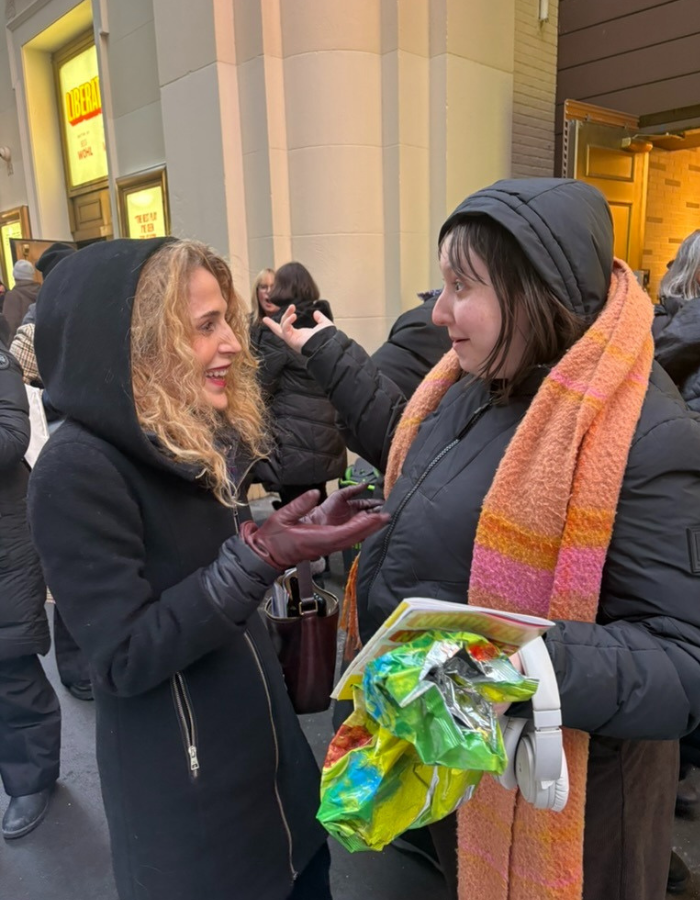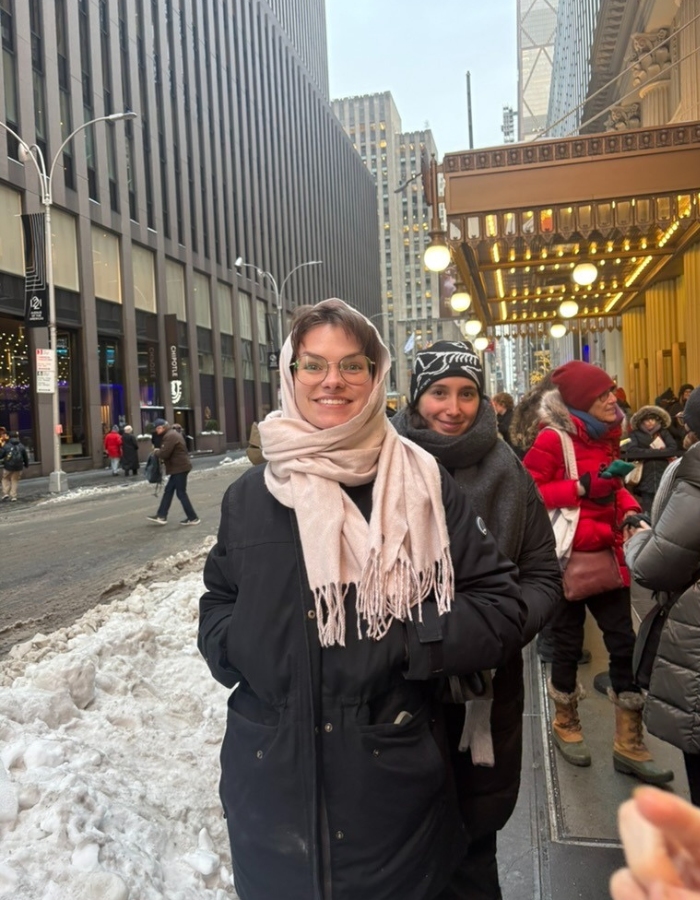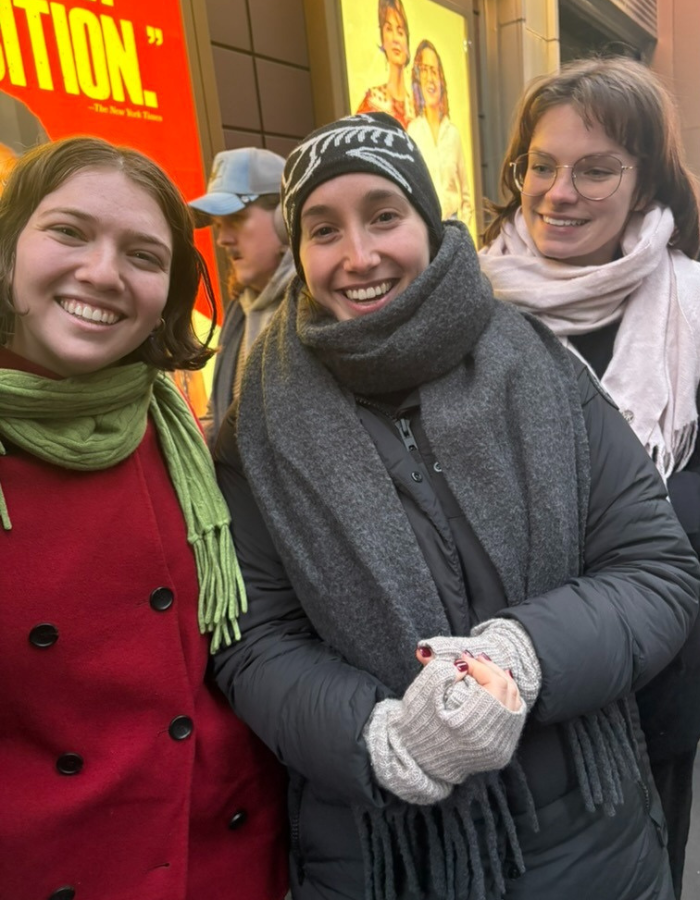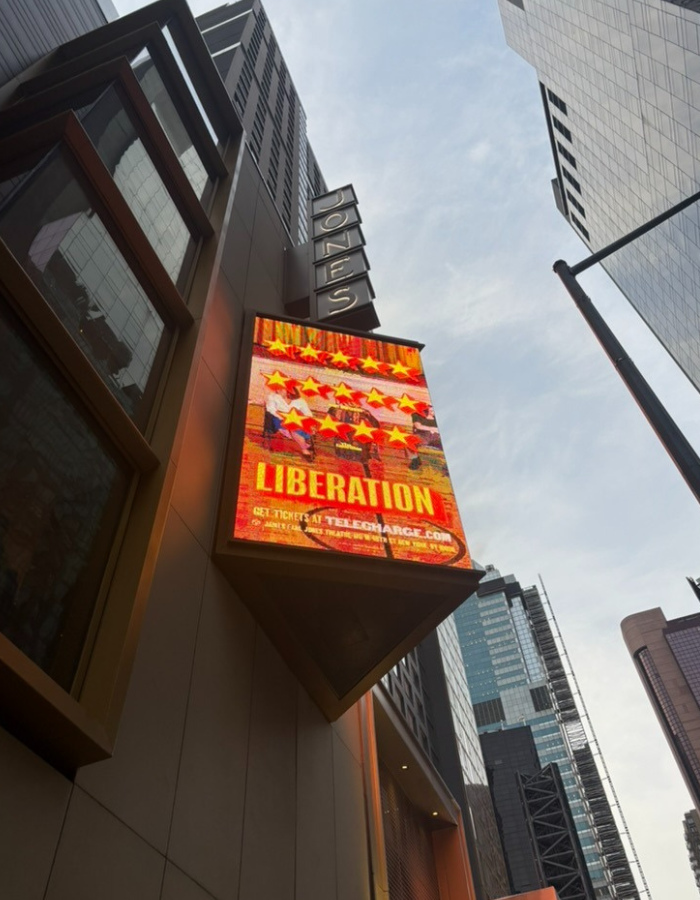
It was 19 degrees fahrenheit when the frigid but enthusiastic group of the inaugural Jean’s Salon gathered outside the James Earl Jones Theatre to see Liberation. But even the sub-freezing temperatures could not stop our energy and excitement! The group consisted of La Femme’s executive director Jean Lichty, two playwrights-in-residence Abigail Duclos and Tess Inderbitzen, Pendleton Directing Fellowship recipient Mikayla Gold Benson, and me: Molly Greenwold the La Femme Senior Fellow.
Liberation, written by Bess Wohl and directed by Whitney White, tells the story of Wohl’s mother and her friends who started a consciousness-raising group in a school gym in Ohio in the 1970s. What was most intriguing about the play were the discussions it inspired afterwards. Our dinner conversation was full of lively and respectful debate about its strengths and weaknesses. Tess and Mikayla suggested that the characters did not feel nuanced and authentic and that they felt more like caricatures than real women. Abigail responded that perhaps that was an intentional choice as Wohl was clear about creating this world from imperfect memory and incomplete records of her mother. Jean raised points about authenticity in the play. The climax of the play was a conversation between the playwright and her mother, which Jean argued was lacking the authenticity and anger that she felt would have been present in that generation. In contrast, I found the love and warmth in that scene especially moving. Abigail also brought up the role of anger in the play, wanting more of it. Only one scene has a character fully letting the wall of anger slip, Celeste played by Kristolyn Lloyd. We all wanted to see more female rage. We had a lively discussion about the nudity in the play. Was it exploitative and gratuitous? Was it warranted? Was it a marketing ploy? Were the actors comfortable up onstage?
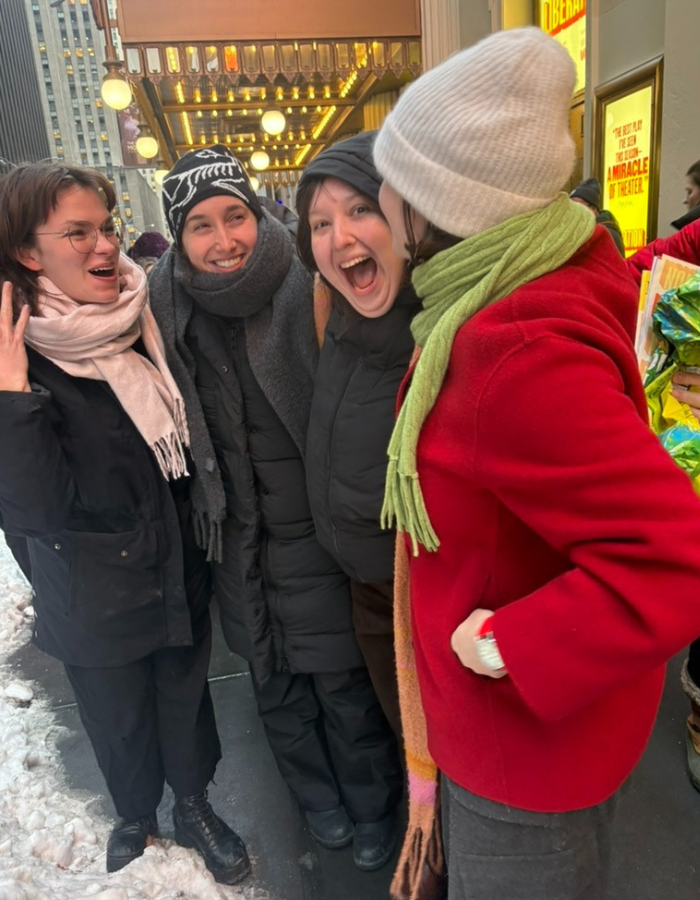
One of the most impactful moments in our conversation was about the role of making art in America right now. In one pivotal scene in the play, the characters discuss whether to participate in a protest for equality. They debate even what the role of protest should be in the movement. That question is present every day in my life. As ICE terrifies the people of Minnesota and Donald Trump consolidates even more power, I wake up every morning with the burning question, “What can I do?” And every day I have to contend with the fact that I don’t know. All of us discussed how hard it is to be an artist right now. We know that art matters and a democratic society is supported by artists who create a forum for education and civic involvement; however, sometimes it feels pointless when the stakes are this high. I felt so seen by the group when I expressed this opinion. I knew I was in a community of other artists who felt the same way, and that we were all committed to finding a way to address what this country is going through.
Jean curated a group of emerging female artists, dedicated to learning from each other and becoming stronger theatre makers and kinder people by actively engaging with our community. Liberation is a play in which women debate and argue. Sometimes they agree, but more often they do not. However, they are all fighting for the same goal and shared values. Jean’s Salon created a space for growth and conversation among young women that aligned perfectly with one of the central tenets of Liberation: “Women speaking uninterrupted is a radical act.”
Molly Greenwold